
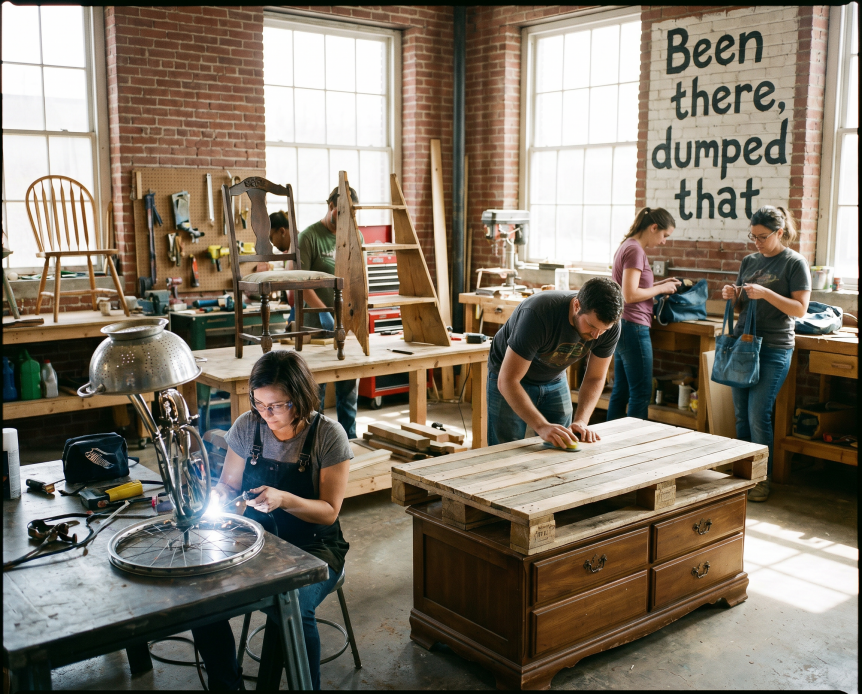
If you’ve ever looked at a piece of furniture and thought, “I can’t throw that away… it just needs a little love,” then you already understand what upcycling is all about.
In a nutshell, upcycling is the art of transforming unwanted or tired items into something else – it could be more beautiful, more useful, and even more valuable than before. It’s not about perfection or about being a professional. It’s about seeing potential where others see waste.
At Been There Dumped That, we believe nothing should be written off too quickly. With a bit of creativity and confidence, messy can become magnificent.
Upcycling vs recycling – what’s the difference?
One of the most common questions people ask is: What is the difference between upcycling and recycling?
Both reduce waste and protect the environment, but they work in different ways.
Recycling breaks materials down into raw form so they can be remade into something new. Glass gets melted. Paper gets pulped. Plastic gets processed.
Upcycling keeps the original item intact and gives it a new life. Instead of breaking something down, you work with what’s already there – perhaps completely reimagining its purpose.
Recycling is industrial.
Upcycling is creative.
Both are important for the environment. But upcycling adds heart
Is upcycling considered recycling?
Technically, upcycling sits under the wider sustainability umbrella because it prevents waste and extends the life of materials.
But there’s one key difference: upcycling adds value. You’re more than simply reusing something. You’re elevating it.
For example, that dated 1950s pine wardrobe becomes a statement piece. That scratched coffee table becomes the star of the room. And that forgotten lamp gets the revamp it deserves.
You’re not just saving it from landfill – you’re giving it a new purpose.
What is considered upcycling?
If you’re increasing the value, usefulness or beauty of an item without breaking it down into raw materials, you’re upcycling. Some simple examples of upcycling projects include:
- Painting and refinishing wooden furniture
- Reupholstering a tired dining chair
- Turning old drawers into wall shelves
- Transforming pallets into garden seating
- Updating kitchen cabinets instead of replacing them
- Converting glass jars into decorative storage
- Revamping an old lamp with new wiring and a fresh shade
It doesn’t have to be complicated. It just has to improve the original piece. You could be tackling a full furniture flip or starting small with a bedside table; every project builds skill and confidence.
Are there any disadvantages to upcycling?
Our gut reaction to this question is a firm “no!” But we’re all about honesty so we need to be clear that it’s not as simple as waving a magic wand. Like any creative project, upcycling takes time and patience.
- You may need basic tools or materials
- There’s a learning curve with new techniques
- Not every item will be worth saving
- Results improve with experience
But here’s a big positive: you learn as you go. And every project makes the next one easier.
Upcycling isn’t about getting it perfect first time. It’s about trying.
It’s also surprisingly good for your wellbeing. Working with your hands, solving little design challenges and seeing visible progress can be incredibly grounding. Many people find upcycling boosts confidence, reduces stress and sparks creativity they didn’t realise they had.
Why upcycling matters more than ever
In a world of fast furniture and throwaway culture, upcycling brings back the “make do and mend” mindset – but with style.
Upcycling allows you to:
- Reduce landfill waste
- Save money on new furniture
- Create one-of-a-kind pieces
- Learn practical, lifelong skills
- Be part of a growing creative community
And perhaps most importantly, it reminds us that most things have a life beyond their original intended use – they’re just waiting for a fresh perspective.
Some frequently asked questions about upcycling
Is upcycling environmentally friendly?
Yes. Upcycling reduces waste, lowers demand for new manufacturing and extends the life of existing materials – all of which reduce environmental impact.
What materials can be upcycled?
Wood, metal, fabric, glass, pallets, doors, cabinets, chairs – almost anything with solid structure and potential can be upcycled.
Do I need experience to start upcycling?
Not at all. Many people begin with simple paint projects. Confidence grows quickly once you see what’s possible.
Ready to start?
Look around your home with fresh eyes. That piece you’ve been meaning to replace? It might just be your first upcycling project.
Start small. Experiment. Learn. Share your progress.
Because every expert once picked up a paintbrush for the very first time.
And who knows? That forgotten piece could be the beginning of something brilliant.
Why not head over to our Facebook community for inspiration or to share your upcycling victories – or experiments!